The name has been changed to protect this dog’s privacy.
This case study explores a real-life situation with a young goldendoodle living on a farm.
Every day, he was free to explore the farm: fields, creek, swimming pool, woods. He was in his teen months, very lively and curious.
His pet parent wanted him to maintain that free lifestyle. She didn’t want to restrict him unnecessarily or force a change in his personality. Freedom to enjoy life as a farm dog was important.
However, the pup did need some training assistance for safety:
He wouldn’t come back right away when recalled. When he ran into the woods, he would look back when his pet parent called him, and then he would run farther away, enjoying the keep-away game. He would only return when he chose to.
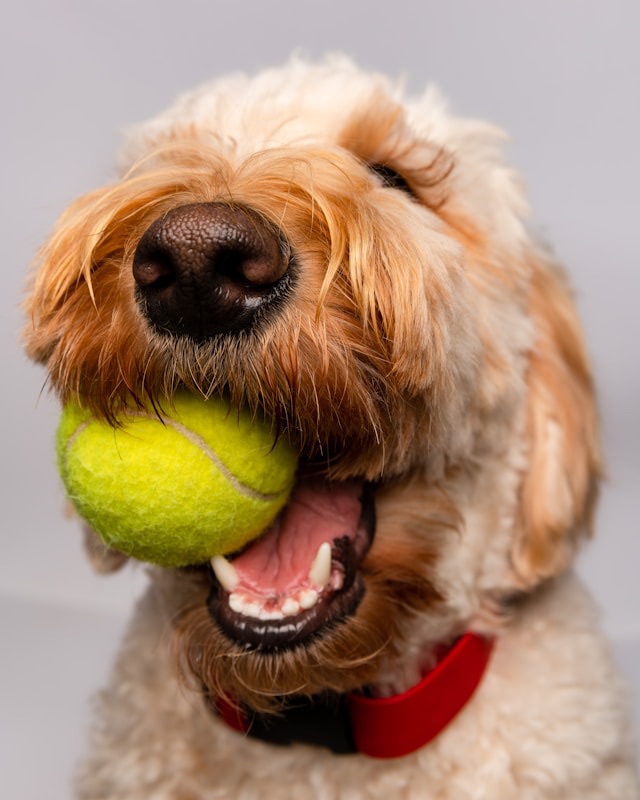
When accompanying his pet parent on walks through the farm, the pup often ran ahead or got easily distracted. He would run off and take a different path, causing the pet parent to chase after him and keep calling to no avail.
While the main farm road wasn’t busy, it did have occasional traffic. The farm next door had cows and occasional holes in the fence. Reliable recall was important for safety.
Whenever the dog had to go into town, to the groomer or vet, he resisted and fought his leash. He demonstrated reactive leash rage behavior, which included kicking, jerking, and tugging hard against his human companion.
During this challenging season, I was his pet sitter and doggy daycare provider. I experienced these concerns firsthand. The most unnerving for me was when he would run off into the woods. When you’re responsible for someone else’s dog, the last thing you want is to see them heading away from the yard and refusing to come back when called. Even promises of treats didn’t work.
While I tried to keep him at the back of the farm property, I was still concerned he might run toward the street out front, especially if he decided to chase a squirrel. His teen energy and big-dog running stride combined with his lack of recall always had me on edge.
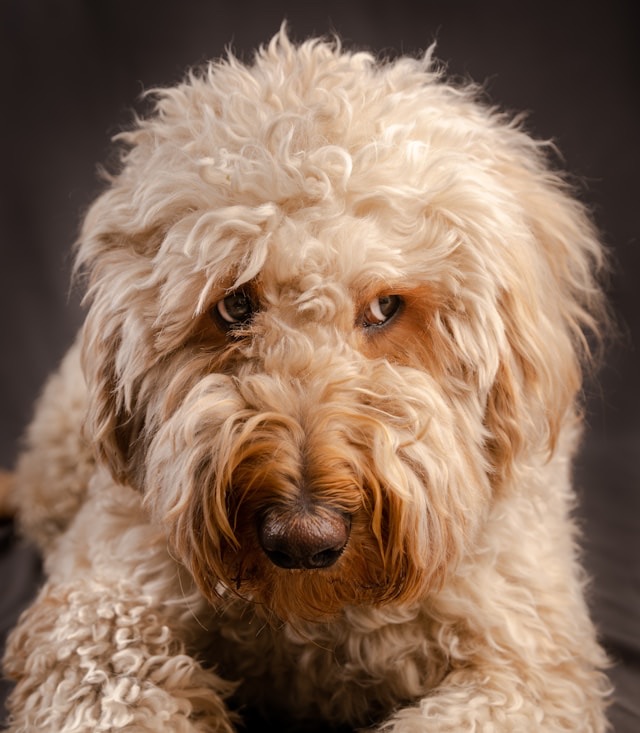
The scariest moment was when I had him on the leash, and he literally launched me into the air. I saw the landscaping boulders below as I sailed to the driveway. Somehow, I safely planted my feet and was able to stop him from dragging me farther. But with a teenage doodle, that took a lot of effort.
His pet parent decided to call a trainer who came out to work with the pup and parent.
The trainer decided to start with one primary intervention: teaching him the heel command. This would help the pup learn to return to a specific position on cue.
The training sessions consisted of repetition, praise, treats, and repeated practice with trainer guidance.
One simple command, and the change was profound.
Heel became a reliable recall command with an immediate behavioral change. From anywhere on the property, the pup would return to the heel command. When he ran too far ahead on a farm walk, heel brought him right back.
After a short time, treats were no longer required as the pup simply demonstrated his obedience. His good behavior was reinforced with praise.
Because the heel command was so successful, the pup kept his freedom to explore the farm off-leash and to run ahead on farm walks. His personality and energy remained the same. He simply became more cooperative about returning when called.
As his pet sitter, I noticed the change right away. Farm walks became more manageable. Distractions didn’t interfere with his obedience. Leash rage disappeared. Safety became much less of a concern, knowing that if he got too close to the road or ran into the woods, he would return immediately when called.
The only time the heel command doesn’t work so well is when his girlfriend, a female doodle who lives nearby, comes to visit. His training disappears as he makes a full-speed run to greet her.
The intervention in those moments is to keep him sitting still as the car pulls in. He obeys with squirms and false starts. The moment the car stops, he makes a beeline for her, and no command can hold him back.
The beautiful part of his heel training is that it didn’t change who he is. He still gets to run free, explore, play, jump, and be an energetic farm doodle. What the training achieved was the confidence to recall him in moments of concern for safety, and the trust to take him into town on leash without concern about reactive behavior.
*****
If content like this helps your clients better understand what’s happening with their dogs, and what realistic progress can look like in everyday environments, I’d love to work with you.
I create content that reflects real-life dog ownership experiences in a clear, relatable way so pet parents feel more confident navigating training stages, stay engaged in the process, and continue building trust in your guidance along the way.

